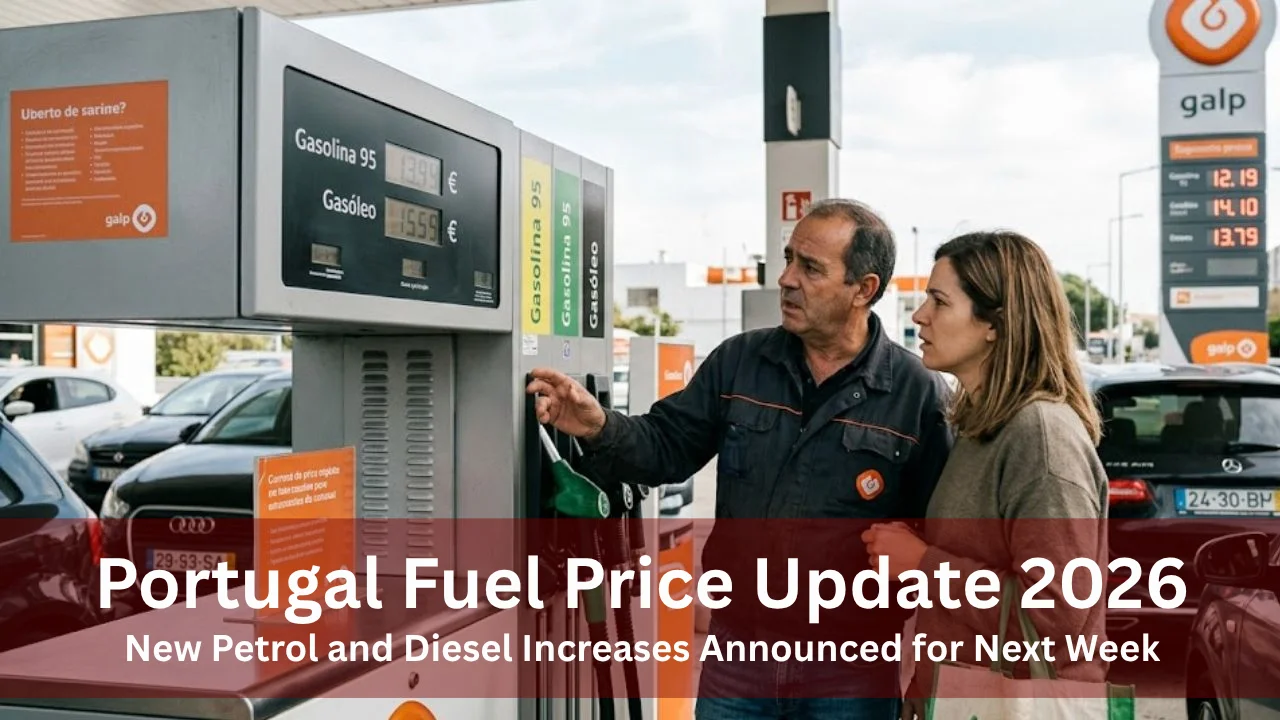
Portugal Fuel Price Update 2026: Portugal Fuel Price Update 2026 is becoming a major topic of concern as fuel costs continue to rise week after week. Drivers, businesses, and daily commuters are all feeling the pressure of increasing petrol and diesel prices. With another hike expected soon, people are closely watching how much more they will have to pay at fuel stations.
The latest Portugal Fuel Price Update 2026 shows that the situation is not improving anytime soon. Instead, prices are moving upward due to global oil supply issues and ongoing tensions in key regions. This update gives a clear picture of what to expect next week, why prices are rising, and how it may affect everyday life.
Portugal Fuel Price Update 2026
The Portugal Fuel Price Update 2026 reflects a steady increase in fuel costs, marking the third consecutive week of price hikes. Diesel prices are expected to rise sharply, crossing the two euro mark per litre, while petrol prices are also climbing steadily. These changes are influenced by global oil market instability, supply chain disruptions, and geopolitical tensions.
For consumers, this means higher daily expenses, especially for those who rely on personal vehicles. Businesses that depend on transport are also facing rising operational costs. The Portugal Fuel Price Update 2026 is not just about numbers at the pump, it highlights a larger economic impact that affects spending habits, transportation choices, and even long term energy planning. Staying informed about these updates helps individuals make smarter decisions about fuel usage and budgeting.
Overview of Fuel Price Changes
| Category | Details |
| Diesel Price Increase | Around 15 cents per litre |
| Petrol Price Increase | Around 9 cents per litre |
| Expected Petrol Price | €1.947 per litre |
| Expected Diesel Price | €2.077 per litre |
| Weekly Trend | Third consecutive increase |
| Data Source | National fuel retailers association |
| Government Role | Possible tax adjustments |
| Market Condition | Highly unstable |
| Key Cause | Global oil supply issues |
| Consumer Impact | Higher daily expenses |
Fuel Prices Continue to Rise for Third Week
Fuel prices are rising again, making it the third week in a row with noticeable increases. The Portugal Fuel Price Update 2026 confirms that diesel prices are expected to go beyond two euros per litre, which is a psychological and financial milestone for many drivers.
This consistent rise is not just a short term fluctuation. It reflects ongoing pressure in the global oil market. For regular commuters, this means spending more every week on fuel. Over time, these increases can add up and affect monthly budgets in a significant way.
Data from Fuel Retailers and Energy Authorities
The estimates in the Portugal Fuel Price Update 2026 come from reliable industry sources, including fuel retailers and energy authorities. These predictions already include taxes, giving a realistic idea of what consumers might pay.
However, prices may still vary slightly depending on location, brand, and individual petrol stations. Some areas may offer slightly better rates, but the overall trend remains upward. This makes it important for consumers to stay updated and compare prices when possible.
Reasons Behind the Fuel Price Increase
The main reason behind the rising prices is the instability in global oil markets. The Portugal Fuel Price Update 2026 highlights how geopolitical tensions are affecting oil supply chains.
One of the major concerns is disruption in key oil transport routes. When supply becomes uncertain, prices naturally rise. Demand remains strong, but limited supply creates pressure on pricing. This imbalance is one of the biggest drivers of the current fuel price surge.
Impact on Daily Life and Commuters
The impact of rising fuel prices is clearly visible in everyday life. The Portugal Fuel Price Update 2026 shows that households are now spending more on transportation than before.
People are adjusting their routines to cope with higher costs. Some are reducing unnecessary travel, while others are planning trips more carefully. For many families, fuel has become a significant part of monthly expenses, requiring better budgeting and planning.
Effect on Businesses and Transport Sector
Businesses are also feeling the impact of rising fuel costs. The Portugal Fuel Price Update 2026 indicates that logistics and transportation companies are facing higher expenses.
These increased costs often get passed on to consumers in the form of higher prices for goods and services. This creates a chain reaction across the economy, affecting everything from food delivery to retail pricing. Small businesses may struggle more as they have limited capacity to absorb these costs.
Government Response and Possible Tax Cuts
The government may take steps to ease the burden on consumers. According to the Portugal Fuel Price Update 2026, there is a possibility of reducing fuel taxes if prices continue to rise sharply.
Such measures can provide temporary relief, but they are not long term solutions. Policymakers need to balance economic needs with environmental goals. Any decision on tax cuts will depend on how the situation develops in the coming weeks.
Key Government Measures Being Considered
- Monitoring weekly fuel price changes
- Possible reduction in fuel taxes
- Adjusting policies based on global market trends
- Supporting consumers during price surges
Global Oil Market and Geopolitical Influence
The Portugal Fuel Price Update 2026 is closely linked to global developments. Oil prices are influenced by political tensions, supply disruptions, and market uncertainty.
When major oil producing regions face instability, the effects are felt worldwide. Portugal, like many other countries, depends on global oil imports. This makes it vulnerable to international price changes and supply issues.
Main Factors Driving Fuel Prices
- Geopolitical tensions in oil producing regions
- Disruptions in supply chains
- Changes in global demand
- Market uncertainty and speculation
Shift Toward Alternative Transportation
Rising fuel costs are encouraging people to explore alternative transportation options. The Portugal Fuel Price Update 2026 suggests a growing interest in public transport and shared mobility.
Carpooling and ride sharing are becoming more common as people look for ways to reduce expenses. Public transport systems may see increased usage as they offer a more affordable option compared to private vehicles.
Growing Interest in Renewable Energy
The current situation is also pushing discussions about renewable energy. The Portugal Fuel Price Update 2026 highlights the need for long term solutions to reduce dependence on fossil fuels.
Investing in renewable energy can help stabilize costs and reduce the impact of global oil market fluctuations. Governments and organizations are increasingly focusing on sustainable energy sources to ensure future stability.
Consumers Advised to Plan Fuel Usage
Consumers are being advised to plan their fuel usage carefully. The Portugal Fuel Price Update 2026 shows that small strategies can make a difference in managing costs.
Filling fuel earlier in the week, comparing prices, and reducing unnecessary travel are some practical steps. These actions may not eliminate the impact, but they can help reduce financial pressure.
FAQs
1. What is the Portugal Fuel Price Update 2026 about?
It provides the latest information on rising petrol and diesel prices and explains the reasons behind these increases.
2. How much are fuel prices expected to increase?
Diesel may rise by about 15 cents per litre, while petrol may increase by around 9 cents per litre.
3. Why are fuel prices increasing again?
The increase is mainly due to global oil supply issues and geopolitical tensions affecting the market.
4. Will the government take action to reduce prices?
There is a possibility of tax reductions if prices continue to rise significantly.
5. How can people manage rising fuel costs?
They can use public transport, plan trips carefully, and compare fuel prices to save money.