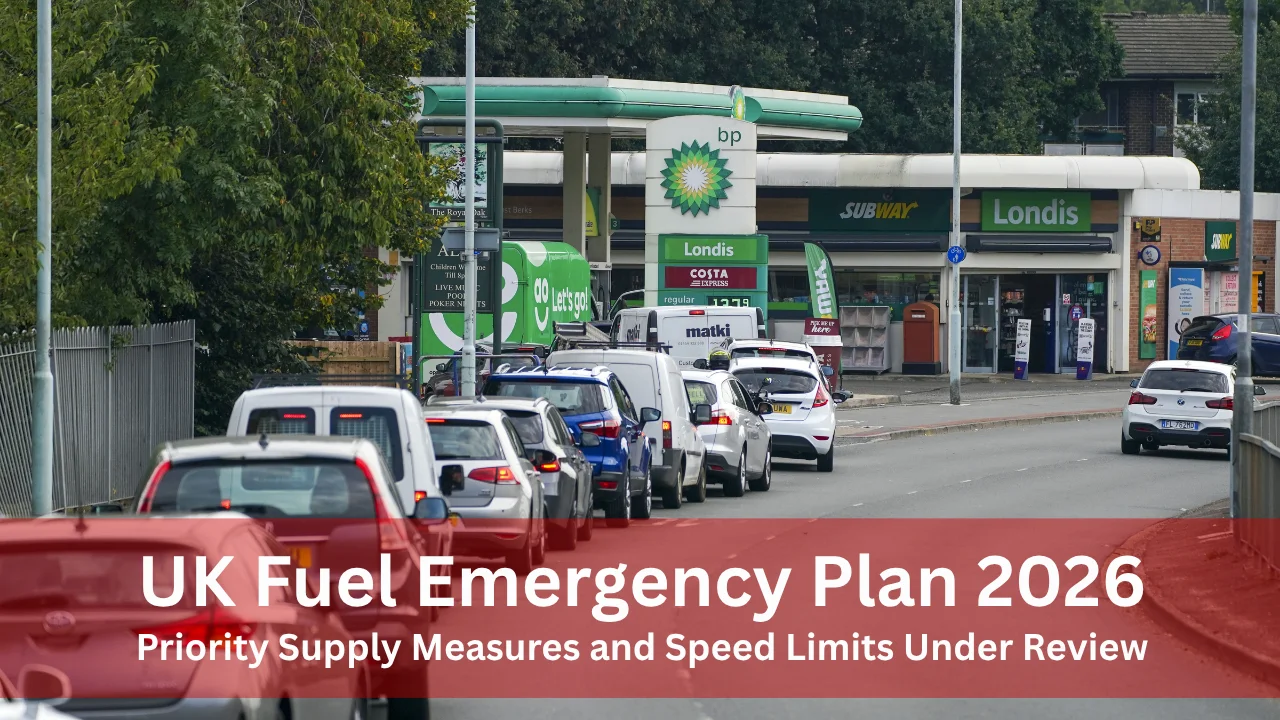
UK Fuel Emergency Plan 2026: UK Fuel Emergency Plan 2026 is becoming a major topic as global tensions start to affect energy supply chains. People across the country are naturally concerned about fuel availability, rising costs, and how daily life might be impacted. The government has stepped in early with reassurances, making it clear that fuel stations are currently stable and there is no immediate reason to worry. At the same time, planning is underway to handle any sudden disruptions if they arise.
The UK Fuel Emergency Plan 2026 is not just about reacting to shortages but preparing for every possible scenario. This article breaks down what is happening, why it matters, and what measures could be introduced if the situation changes. From diesel concerns to priority access for essential services, everything is explained in a simple and practical way so you understand exactly what to expect.
UK Fuel Emergency Plan 2026
The UK Fuel Emergency Plan 2026 is a structured response designed to protect the country from fuel supply shocks caused by global disruptions. It focuses on keeping essential services running while ensuring the public continues to have access to fuel in a controlled and fair way. With tensions affecting global oil routes, the government is actively reviewing its emergency framework, last updated in 2024, and preparing to act quickly if needed. The plan includes steps like prioritising key sectors, managing demand, and maintaining supply chains. By working closely with energy companies and logistics providers, authorities aim to prevent panic and ensure stability. This approach highlights a proactive strategy that balances preparedness with public reassurance.
Overview Table
| Key Aspect | Details |
| Plan Name | UK Fuel Emergency Plan 2026 |
| Current Fuel Status | Petrol supply stable across the UK |
| Key Risk | Possible diesel shortage in coming weeks |
| Global Cause | Disruption in Strait of Hormuz oil route |
| Government Response | Preparing contingency plans |
| Priority Sectors | Healthcare, emergency services, food supply |
| Demand Control Measures | Remote work, reduced travel, speed limits |
| Emergency Actions | Rationing and limited fuel access |
| Backup Support | Military and reserve tanker deployment |
| Public Advice | Avoid panic buying and continue normal behaviour |
Strait of Hormuz Blockade Impacts Global Oil Flow
A major factor behind the UK Fuel Emergency Plan 2026 is the disruption in one of the world’s most important oil routes. The Strait of Hormuz carries a significant portion of global oil supply. When this route is affected, it creates a ripple effect across international markets.
Even though the UK has a diversified fuel supply system, it is still connected to global pricing and availability. When supply tightens globally, costs increase and delivery schedules can be affected. This is why early planning under the UK Fuel Emergency Plan 2026 is important to reduce risk before it reaches consumers.
Diesel Shortage Risk Emerging by Late April
One of the key concerns within the UK Fuel Emergency Plan 2026 is the possibility of a diesel shortage. Experts have indicated that diesel could become limited if current global disruptions continue.
Diesel plays a major role in transportation, especially for trucks, public transport, and logistics networks. If diesel becomes scarce, it could affect food deliveries and supply chains. The government is aware of this risk and is carefully managing the situation to prevent sudden spikes in demand.
Clear communication is being used to avoid panic buying, which can worsen the situation even when supply is manageable.
Essential Industries May Get Priority Access
The UK Fuel Emergency Plan 2026 clearly outlines that essential services will receive priority if fuel becomes limited. This ensures that critical systems continue to function without interruption.
Priority sectors include:
- Emergency services such as police, fire, and ambulance
- Hospitals and healthcare transport
- Public transport systems
- Food supply and distribution networks
These sectors are at the core of daily life. Ensuring they receive fuel first helps maintain stability across the country.
Manufacturing Sector Could Face Pressure
Energy-intensive industries are likely to feel the impact if fuel prices rise or supply becomes restricted. The UK Fuel Emergency Plan 2026 considers this challenge as part of its broader economic impact.
Manufacturers may need to reduce production if energy costs increase significantly. This could lead to delays in goods and affect supply chains across multiple sectors. Businesses are already preparing for possible changes, including adjusting operations and managing energy use more efficiently.
Emergency Measures Framework Already in Place
The UK already has a detailed framework that supports the UK Fuel Emergency Plan 2026. This allows the government to act quickly if conditions worsen.
Possible emergency actions include:
- Fuel rationing for the public
- Limits on fuel purchases per vehicle
- Controlled opening hours for petrol stations
- Priority access for essential users
These measures are designed to ensure fair distribution and prevent misuse of resources during critical periods.
Possible Measures to Reduce Fuel Consumption
Managing demand is a key part of the UK Fuel Emergency Plan 2026. Reducing fuel usage helps extend available supply and lowers pressure on the system.
Simple steps like encouraging remote work can significantly cut daily fuel consumption. Reducing domestic travel and promoting public transport also help. Lowering speed limits is another effective way to reduce fuel usage, as vehicles consume less fuel at moderate speeds.
These measures are practical and have been recommended globally during similar situations.
Military and Reserve Support Options
The UK Fuel Emergency Plan 2026 also includes backup strategies for more serious scenarios. If needed, the Armed Forces can assist with fuel distribution across the country.
A reserve fleet of fuel tankers is available to increase delivery capacity. Emergency oil reserves can also be released to stabilise supply and reduce market pressure. These steps ensure that even in difficult situations, the country has additional support systems in place.
Government and Industry Must Work Together
Collaboration plays a major role in the success of the UK Fuel Emergency Plan 2026. The government is working closely with energy companies and logistics providers to maintain a steady supply.
This partnership ensures that decisions are practical and can be implemented quickly. It also helps manage fuel costs and avoid unnecessary disruptions. Clear communication between all parties helps keep the public informed and confident.
FAQs
What is the UK Fuel Emergency Plan 2026?
It is a government strategy designed to manage fuel supply during potential shortages and ensure essential services continue without disruption.
Is there a fuel shortage in the UK right now?
No, fuel supply is currently stable, and petrol stations are well-stocked across the country.
Why is diesel more at risk than petrol?
Diesel is heavily used in transport and logistics, making it more sensitive to global supply disruptions.
Will fuel rationing be introduced?
Rationing is not active yet, but it may be implemented if fuel shortages become severe.
What should people do during this situation?
People should avoid panic buying, use fuel responsibly, and follow official guidance if new measures are introduced.